Künstliche Intelligenz - Ein Kompetenzzentrum für Hamburg

November 26, 2019
Anfang Oktober gab Wirtschaftssenator Michael Westhagemann den Startschuss für ein neues Kompetenzzentrum für künstliche Intelligenz (KI). Die branchenübergreifende Initiative aus Wirtschaft, Wissenschaft und Politik soll technisches Know-how bündeln und Unternehmen und Forschung besser vernetzen.

Anfang Oktober gab Wirtschaftssenator Michael Westhagemann den Startschuss für ein neues Kompetenzzentrum für künstliche Intelligenz (KI). Die branchenübergreifende Initiative aus Wirtschaft, Wissenschaft und Politik soll technisches Know-how bündeln und Unternehmen und Forschung besser vernetzen. Hinter dem Zentrum steht der kurz zuvor gegründete Verein Artificial Intelligence Center Hamburg (ARIC). 800.000 Euro lässt die Stadt in den kommenden zwei Jahren in den Aufbau dieses Zentrums fließen, hinzukommen sollen jährlich 100.000 Euro aus Mitgliedsbeiträgen des Vereins.

Ein weiteres Großprojekt ist der "KI-Space für intelligente Gesundheitssysteme", ein Forschungszentrum für die Weiterentwicklung künstlicher Intelligenz in der Medizin. Die Universität Hamburg ist gemeinsam mit drei weiteren norddeutschen Hochschulen daran beteiligt. Der Bund hat dafür eine Fördersumme von rund zehn Millionen Euro zugesagt, die binnen der nächsten drei Jahre ausbezahlt werden soll. 2020 wollen sich die Forscher an die Arbeit machen, im Fokus sollen intelligente Gesundheitssysteme stehen – das können sogenannte Smart-Living-Home-Assistenten sein oder robotische Assistenzsysteme, die bei der Diagnose von Krankheiten helfen sollen.

Private Akteure drängen auf den Markt

Zudem erkennen immer mehr private Akteure das Potenzial künstlicher Intelligenz: Ende August wurde etwa das Health AI Hub im Astraturm auf St. Pauli eröffnet, eine weitere Schnittstelle zwischen Forschung und Wirtschaft. Vier junge Hamburger Start-ups haben sich darin zusammengeschlossen, darunter das Unternehmen Mindpeak, das eine Software entwickelt hat, die Brustkrebszellen in einer Gewebeprobe innerhalb kurzer Zeit erkennt.

Zum kompletten Artikel.
In the News

Related reading

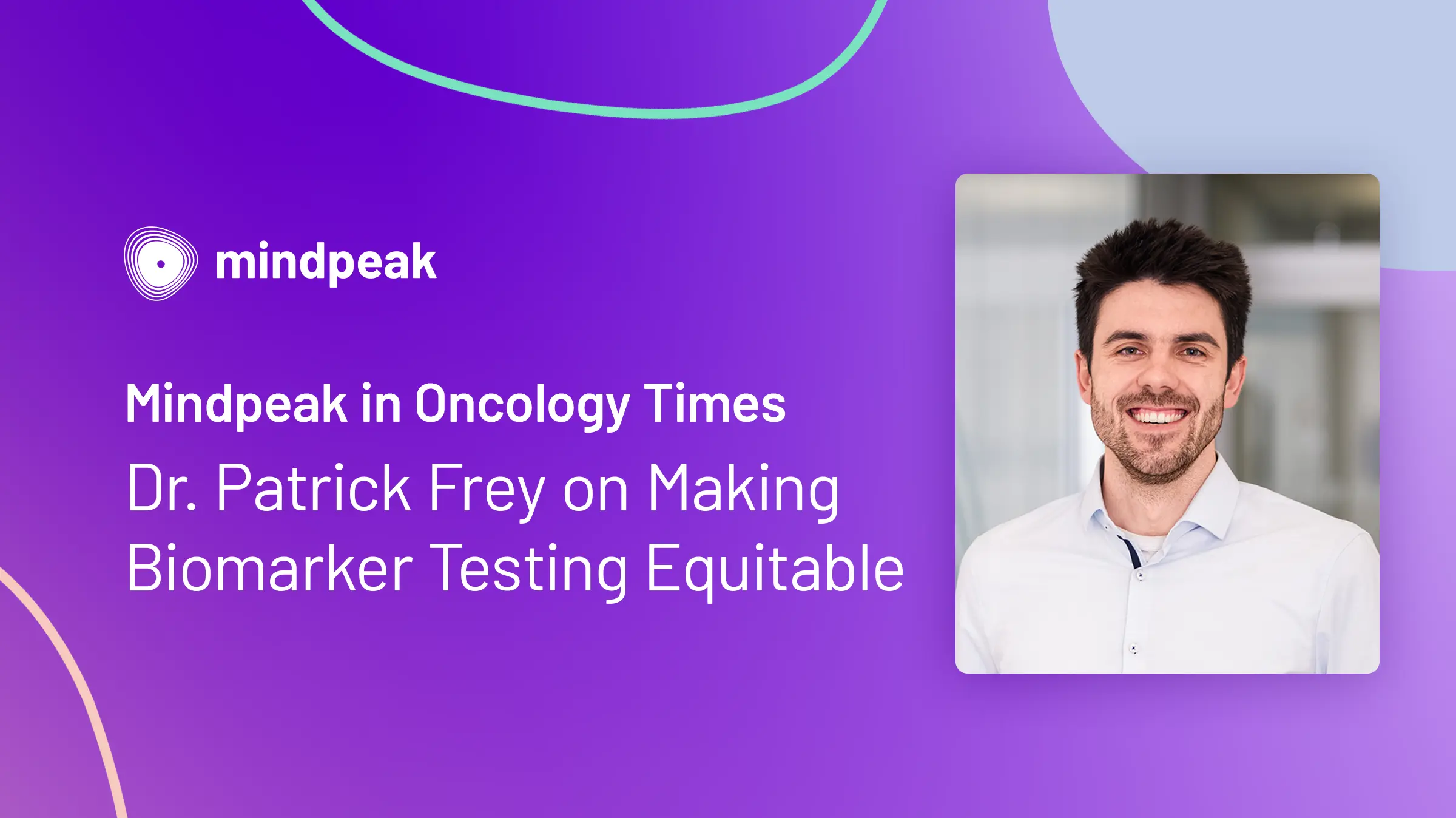
We’re proud to see our VP Precision Medicine, Patrick Frey, featured in Oncology Times sharing his perspective on one of oncology’s most urgent challenges – achieving true equity in biomarker testing.
In the News
8 min read

Mindpeak in Oncology Times

We’re proud to see our VP Precision Medicine, Patrick Frey, featured in Oncology Times sharing his perspective on one of oncology’s most urgent challenges – achieving true equity in biomarker testing.

We’re proud to see our VP Precision Medicine, Patrick Frey, featured in Oncology Times sharing his perspective on one of oncology’s most urgent challenges – achieving true equity in biomarker testing.

As Patrick notes, the conversation must move from if to how. The science and technology already exist; now it’s about ensuring every patient, everywhere, can access and benefit from them.

At Mindpeak, we believe AI-powered pathology can help close that gap – supporting faster, more consistent insights that make precision medicine truly accessible.

In the News
8 min read

AI-Enabled Pathology: De-risking Oncology Drug Development

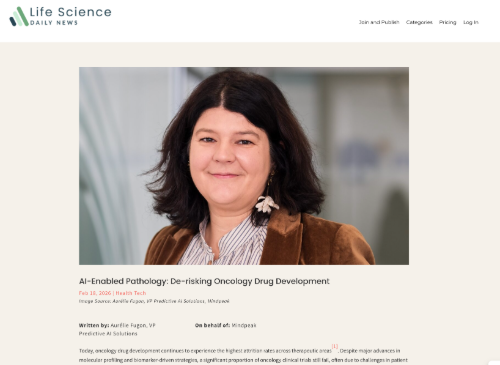
We are delighted to share that Aurélie Fugon, VP Predictive AI Solutions at Mindpeak, is featured in Life Science Daily News.

In her article, Aurélie outlines how AI-supported biomarker-driven strategies can reduce variability in pathology, improve the consistency of patient selection and help de-risk late-stage trials.

All key enablers of more reliable, data-rich clinical decision-making. With Aurélie’s leadership, we’re strengthening collaborations with pharma, biotech and clinical partners to help bring reproducible, scalable biomarker assessment into real-world research settings, shaping the future of predictive AI in precision oncology.

Read the full article here: https://lifesciencedaily.news/ai-enabled-pathology-de-risking-oncology-drug-development/

In the News
8 min read

United by Unique: Advancing Personalised Cancer Care on World Cancer Day

Every person with cancer is unique. So is every diagnosis - and every pathology sample that informs it.

This year’s World Cancer Day theme continues the focus on United by Unique, highlighting the importance of early detection, equitable access, and truly personalised care. It is a powerful reminder that behind every case is an individual with distinct biology, circumstances, and needs.

At Mindpeak, we believe precision medicine should be a right, not a privilege. Scientific and technological advances have transformed what is possible in cancer diagnostics. The challenge now is ensuring these innovations reach patients in ways that reflect their individuality.

Advanced AI models in digital pathology can help bridge this gap. By accelerating insights from complex tissue data and supporting clinicians with consistent, high-quality analysis, AI contributes to faster, more precise and more personalised decision-making.

On World Cancer Day, we stand with the global community in raising awareness and championing approaches that put people first. When we see the person before the disease, we move closer to a future where every individual’s uniqueness is recognized - and reflected - in their care.

Ready to advance your diagnostics

Connect with our team to explore how precision pathology works in your setting